
Dental Implant "Scam Awareness"
- Home
- Dental Implant "Scam Awareness"

If you’ve been searching for dental implants, you’ve probably seen some pretty tempting offers online.
“Free dental implants.”
“100% covered.”
“Dental implant grant available.”
“Get paid for receiving dental implants.”
They sound great. I get why someone would click.
Dental implants can be a major investment, so an offer that promises treatment at little or no cost naturally gets attention. The problem is that some of these ads aren’t coming from the dental office they appear to represent. Some are created by third-party marketers or lead-generation companies that want your contact information first and explain the details later.
That’s where things can get confusing.
At Vistasol Dental, we want our patients to know exactly who they’re contacting, what they’re being offered, and what to expect before they agree to treatment. We don’t want anyone making a dental decision because an online advertisement made something sound easier or cheaper than it really is.
Not every discount or financial assistance program is a scam. That’s worth saying upfront.
But you should slow down when an advertisement promises completely free dental implants without clearly explaining who is providing the treatment, where the treatment will take place, and what the eligibility requirements are.
A common pattern starts with an ad on Google, Facebook, Instagram, or another website. The ad may use phrases such as “limited spots,” “free implant program,” or “patients wanted for a dental implant study.”
You click the ad and arrive at a page that looks professional enough.
Then you’re asked for your name, phone number, email address, or other personal information.
What happens next may have little to do with the dental office you thought you were contacting.
You could start receiving calls or texts from people you don’t recognize. You may be told that you don’t actually qualify for the original offer. Or you may eventually discover that the “free” treatment only covered a particular part of the process, while the rest of the treatment comes with a substantial cost.
That’s why the first question shouldn’t be, “How much is it?”
It should be, “Who exactly is behind this offer?”
A few things should make you stop and take a closer look.
If an advertisement promises completely free dental implants but doesn’t clearly identify the dentist or dental practice, be careful.
If you’re asked to submit your phone number before you’re told where the treatment will happen, that’s another reason to pause.
The same goes for vague references to “government grants,” “special programs,” or “clinical trials” without the name of the organization running the program.
And be especially cautious when you’re pushed to act immediately because there are supposedly only a few spots left.
Good dental care shouldn’t require you to make a rushed decision.
A legitimate dental provider should be able to tell you who they are, where they’re located, who will provide your treatment, what the treatment involves, and what costs you may be responsible for.
If you can’t get straightforward answers, don’t hand over your information just because the offer sounds attractive.
This one can be confusing.
You may see advertisements describing dental implant grants as though anyone can apply and receive completely free treatment.
Real financial assistance programs can have specific eligibility rules, funding limits, participating providers, and other requirements. They aren’t necessarily the same thing as a blanket offer for free dental implants.
So if you see a “grant” advertisement, don’t assume the word grant means the treatment is guaranteed to be free.
Look for the organization behind the program. Find out who actually provides the dental treatment. Check the eligibility requirements. And, if you’re unsure, contact the dental office directly using the phone number or website you independently verified.
A few minutes of checking can save you a lot of frustration later.
You may also come across advertisements suggesting that patients can get paid for receiving dental implants as part of a clinical trial or research study.
Actual clinical research does exist. But a legitimate study should have identifiable researchers, a clear purpose, eligibility requirements, and information about what participation involves.
If an advertisement simply says you’ll get paid for getting dental implants but doesn’t clearly identify the study, research organization, or treating provider, don’t assume it’s legitimate.
Ask questions first.
And don’t feel pressured to provide your personal information just because the advertisement says the opportunity is limited.
I’d start with something very simple:
Verify the dental office yourself.
Don’t rely only on the phone number or website shown in the advertisement.
Search for the practice independently.
Visit its official website.
Check whether the address and phone number match.
Look for the dentist’s name and professional information. Make sure the office actually offers dental implant treatment.
Then call the practice directly and ask whether the promotion you saw is theirs.
If the staff says they’ve never heard of it, don’t continue with the third-party form.
That’s probably the clearest answer you’re going to get.
Don’t panic.
If you’ve already entered your name, phone number, or email address into one of these forms, be careful about what happens next.
You don’t have to agree to treatment simply because someone contacted you. You don’t have to give payment information over the phone because someone says you’ve “qualified.” And you certainly don’t have to make a decision during a sales call.
If you’re receiving unwanted calls or messages, ask who is contacting you, what company they represent, and how they obtained your information.
If the answers aren’t clear, don’t provide additional personal or financial information.
You can also contact the dental office you originally thought you were reaching and ask whether the advertisement was actually connected to them.
A real implant consultation should be about your mouth and your specific situation, not just a number on an advertisement.
Your dentist needs to understand your oral health, examine the area where the tooth is missing, review appropriate diagnostic information, and determine whether implants are suitable for you.
The treatment plan may also depend on things such as the condition of your jawbone, the number of teeth being replaced, your existing dental work, and the type of restoration you need.
In other words, there isn’t one “free implant” button that works for everybody.
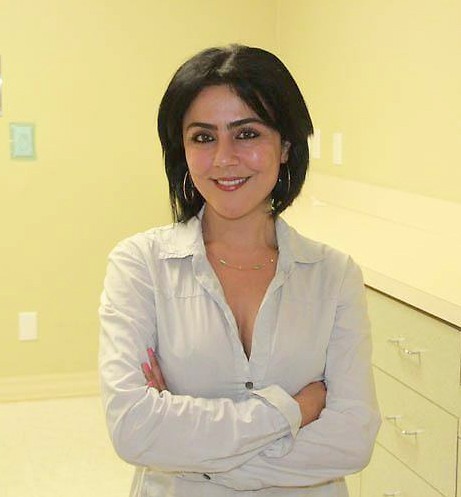
At Vistasol Dental, we take the time to explain treatment and answer questions so patients understand what they’re choosing. Our practice provides general, cosmetic, restorative, orthodontic, and dental implant care in Montebello, and Dr. Noushin Adhami has more than 15 years of experience caring for patients in the community.
We’d rather have you ask ten questions than agree to something you don’t understand.
You don’t have to assume every low-cost dental offer is fraudulent.
You just shouldn’t assume it’s legitimate either.
Take a minute. Find out who is actually offering the treatment. Verify the dental office independently. Ask what the offer covers and what it doesn’t. And don’t give your personal information to a company you can’t clearly identify.
If you’re considering dental implants and aren’t sure about an offer you’ve seen online, you’re welcome to contact Vistasol Dental directly. We’d be happy to help you understand what your treatment options are and answer your questions without the pressure of an online “limited-time” offer.
Your smile is worth taking a little extra time to get the facts straight.

Dr. Adhami has been a great dentist for many, many years. She is one of the friendliest and most empathetic dentists I’ve ever met. Plus, the most important part, my teeth come out as clean as ever after a visit, and she is quite knowledgeable. She comes highly recommended by many, and I’ve recommended her to quite a lot of family/friends as well. The staff, too, are quite kind whenever I come around and I’ve had no problems through all my years coming here with scheduling or waiting.

I recommend vista sol dental for anyone looking for a great dentist. Dr. Adhami was great. She explained everything before she did it which really helped me understand. Her office is very clean with great parking and all of the assistants are nice and friendly. The price was also really affordable.

My faith in the dental industry has been restored! I can’t believe all the previous dentists I’ve been to had said that I needed crowns, I needed this and I needed that. Dr. Noushin Adhami was amazing. She gave it to me straight, what I REALLY needed (two replacement fillings and a deep cleaning) as opposed to what another dentist told me (four new crowns, deep cleaning, and invisalign!) The offices themselves were ok. But I’ve noticed the nicer the offices – the more you’ll pay. Hey, someone has to pay for those flatscreen tvs! The staff was great! Other dental offices would send me home after xrays, saying “oh, you’ll need to schedule another appointment if you want your cleaning.” This office said “well, you’re here now, why not just get it done now?” WHAT?!?! Seriously…now that is service!!! I hated the dentist. Seriously HATED going. Now, it’s not so bad. I’m not going to be skipping to get those fillings replaced, but I’m not terrified anymore. Dr. Adhami was a sweetie. She explained what she was doing, when she was going to “poke” or “tap” and where so there wasn’t any surprise. She was thorough and answered all my questions with patience and honestly. Going back this week for my scheduled work and I’m not dreading it. That’s saying a lot!

This was the best experience I have ever had at the dentist ever! I have had a very serious phobia of going to the dentist since I was a child and my appointment at Vistasol with Dr. Noushin Adhami has changed the way I look at dental appointments. Dr. Adhami took her time with me, was very patient and gentle, and she made sure that I was comfortable throughout my entire appointment. She was very honest and explained everything about my x-rays in detail so that I would understand fully. The last few times I have gone to the dentist, I have had to choose sleep/sedation dentists so that I could be sedated with an IV but Dr. Adhami was so gentle and excellent with what she did, that I did not need to be put to sleep! I am no longer have pain on my upper left back teeth and my smile looks great! I am so thankful for finding this office! I give it TWO thumbs up all the way!
Contact Vistasol Dental in Montebello to schedule a consultation and discuss your options with our dental team.
Vistasol Dental
1000 W. Whittier Blvd.
Montebello, CA 90640
(323) 346-0208
No, not every offer involving reduced-cost or free dental treatment is automatically a scam. But you should be careful when an advertisement promises completely free dental implants without clearly explaining who is providing the treatment, where the treatment will take place, and what the offer actually covers.
If you can’t identify the dental practice or provider behind the offer, don’t rush to submit your personal information. Take a few minutes to verify who you’re dealing with first.
Start by looking beyond the advertisement itself. Search for the dental practice independently and visit its official website. Check that the office address, phone number, dentist’s name, and services all match.
I’d also call the dental office using the contact information you found independently and ask whether the promotion is actually theirs. If the office doesn’t recognize the offer, that’s a pretty good reason to stop there.
Some financial assistance programs may exist, but you shouldn’t assume that every online advertisement mentioning a “dental implant grant” is connected to a legitimate program.
Look for the organization offering the assistance, the eligibility requirements, participating providers, and exactly what costs are covered. A grant doesn’t necessarily mean your entire dental implant treatment will be free.
Sometimes an advertisement may be designed to generate leads rather than connect you directly with a dental office. You may enter your name, phone number, or email address expecting to speak with a dentist, only to receive calls from a company you didn’t realize was involved.
That doesn’t mean every third-party advertisement is fraudulent. It does mean you should know who you’re giving your information to and what will happen after you submit the form.
Watch for promises that sound unusually good, especially when they’re paired with pressure to act quickly.
Be cautious if the advertisement doesn’t clearly name the dentist or dental practice, asks for personal information before explaining the treatment, uses vague claims about grants or clinical trials, or says there are only a few spots available.
You also shouldn’t feel pressured to make a healthcare decision simply because an advertisement tells you to “act now.”
That doesn’t automatically prove the advertisement is legitimate.
If you recognize a dentist or dental practice in an advertisement, go directly to that practice’s official website and contact the office yourself. Don’t assume the phone number, website, or form shown in the advertisement actually belongs to the practice.
It’s a simple extra step, but it can save you from giving your information to someone who isn’t connected with the dental office at all.
Don’t panic. You haven’t agreed to treatment just because you submitted a form.
Be careful about what you provide next. If someone contacts you, ask who they are, what company they represent, why they’re calling, and how they received your information. Don’t provide payment details or agree to treatment during a high-pressure sales call.
If you believe the advertisement misrepresented the offer or collected your information deceptively, you can also consider reporting it to the appropriate consumer protection agency.
Legitimate clinical research does exist, and some studies may cover certain treatment-related costs or provide compensation for participation. But a real study should have identifiable researchers or an organization behind it, clear eligibility requirements, and information explaining what participation involves.
If an advertisement simply promises free implants or says you’ll get paid without telling you who is conducting the study, slow down. Ask questions before giving anyone your personal information.
A legitimate consultation should focus on your individual dental needs, not just a promotional price.
The dentist should evaluate your oral health and the area where the tooth or teeth are missing, discuss whether implants are appropriate for you, and explain the treatment options and expected costs. Depending on your situation, additional diagnostic information may also be needed before a treatment plan can be finalized.
There isn’t one treatment plan that works for everyone. Your dental needs come first.
Don’t feel pressured to decide immediately. Save the advertisement, research the company or dental office independently, and contact the provider directly through a verified website or phone number.
If you’re considering dental implants in Montebello and want to discuss your options with a real dental team, you can contact Vistasol Dental. We’d rather answer your questions and help you understand your options than have you make a decision based on an advertisement you don’t fully understand.
When it comes to your dental care, taking a little extra time to check the facts is never a bad idea.